President Trump’s order calling Lake Ontario “Lake America” applies only in the United States, while the water remains shared with Canada. George Rippey Stewart’s Names on the Land offers a historical frame for the contradiction: governments can prescribe names more easily than they can make communities accept them.
Tariff threats and talk of Canadian statehood assume that market access should follow political membership. Harold Innis’s commodity-centered economic history starts from the opposite complication: trade and sovereignty often occupy different maps.
A report that Amazon is buying books, scanning them for AI training, and destroying the copies revives the problem Nicholson Baker placed at the center of Double Fold. Information can survive extraction even as the evidence that carried it disappears.
Smart glasses can make an ordinary glance indistinguishable from an act of capture. John Berger’s Ways of Seeing clarifies what disappears when only the camera wearer knows what kind of encounter is taking place.
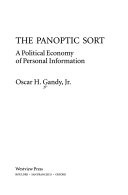
When surveillance technology is abused, companies tend to promise stricter access, auditing, and oversight. Oscar H. Gandy’s The Panoptic Sort clarifies the harder question: whether governing access to an expansive record system is the same as protecting privacy.
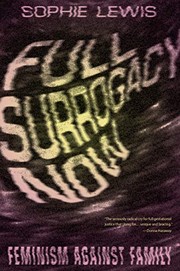
Surrogacy can involve several people with legitimate claims on the future, but only one person bears the pregnancy. Sophie Lewis’s combative subtitle, “Feminism Against Family,” clarifies how easily the desire to create a family becomes a claim of authority over someone else’s body.